 Skip to content
A family meeting after a funeral often begins with a simple question: “When can we finally divide everything?” The will may have been admitted, the personal representative may have authority, and everyone may agree in principle. Yet a Texas estate with land, unpaid obligations, minor beneficiaries, or competing claims cannot safely be handed out through an informal family agreement.
Texas Estates Code Chapter 360 provides a formal path for partition and distribution. It connects the work of administering an estate with the final transfer of property to heirs and devisees. The process is designed to identify the correct beneficiaries, calculate what remains, protect creditors, and divide non-cash assets fairly.
Navigating the Final Steps of Texas Probate
Suppose three siblings inherit a parent's rural property, bank accounts, and household belongings. One sibling wants the land, another wants money, and the third lives outside Texas. Even if they trust one another, the executor still needs a legally supportable way to determine what each person receives and when the estate can be closed.
Partition means dividing estate property among the people entitled to it. Distribution means transferring those shares. Chapter 360 treats these as court-supervised steps rather than a casual handoff, because the estate may still have debts, future expenses, or beneficiaries whose interests require protection. The statute also distinguishes between dividing the entire eligible residue and distributing only a portion before the administration is complete. Texas Estates Code Chapter 360 supplies the statutory framework.
The word “partition” can cause confusion because it's also used in real-estate disputes between co-owners. A general explanation, such as this guide from Olson & Sons, can help families understand the broader idea of dividing shared property. Estate partition under Chapter 360, however, occurs within the probate case and follows probate-specific requirements.
Why an informal division creates risk
A family might agree that one heir will keep the homestead while another receives a vehicle or account. That arrangement can become dangerous if the estate later faces an unpaid creditor, a tax obligation, or a challenge from a minor heir. The executor could then be asked why property was transferred before the estate's obligations and all beneficiaries were properly addressed.
The statute creates a record. The court can identify the residue, confirm the people entitled to shares, review advancements, require notice, and approve the final division. Those safeguards may feel slow during an already painful period, but they reduce the chance that a grieving family will face a second dispute after distribution.
Practical rule: Treat the final distribution as a legal closing process, not simply as the moment when family members pick up their inheritance.
Families also need to distinguish Chapter 360 from other probate routes. A straightforward estate may use an independent administration, while a contested estate may require more court involvement. A Texas Probate Process resource can help explain how the broader administration path affects expectations, but the Chapter 360 milestones still matter when the estate is ready for partition and distribution.
Understanding the Statutory Waiting Periods
The timing rule is central. Under Chapter 360, an executor, administrator, heir, or devisee may request partition and distribution only after the first anniversary of the date the original letters testamentary or letters of administration were granted. The anniversary is measured from the grant of authority, not solely from the decedent's date of death. Section 360.001 establishes this post-initial-administration pathway.
The reason is practical. The estate needs time to identify creditors, gather assets, complete required filings, and stabilize administration. Chapter 360 isn't an immediate shortcut around those responsibilities.
Full partition and partial distribution
A request for full partition generally follows the statutory anniversary threshold and must be made by written application in the court where the estate is pending. The application must identify the decedent, each person entitled to a share, whether each person is an adult or minor, and why partition and distribution should occur.
A partial distribution follows a different timing path. It may be requested earlier once the inventory, appraisement, and list of claims have been filed and approved. These documents create a clearer picture of the estate's property and obligations. Even then, the court must follow notice and hearing requirements before approving a transfer.
The distinction matters when an estate has a stable asset that can be transferred without endangering creditors, while other property still needs administration. A partial distribution doesn't mean the estate is finished. It means the court has authorized a carefully limited transfer.
A practical timing checklist
- Confirm the authority date. Locate the date original letters were granted. That date controls the anniversary milestone.
- Track the administration record. Confirm that the inventory, appraisement, and list of claims have been filed and approved before seeking a partial distribution.
- Prepare the written application. Include the required identity, beneficiary, age-status, and reason-for-distribution information.
- Plan for notice and hearing. Interested parties, including known creditors when required, must receive legally sufficient notice.
- Protect assets until approval. Keep estate property under proper control until the court authorizes the transfer.
For a plain-language explanation of the court documents that give a representative legal authority, see Letters Testamentary and Letters of Administration in Texas.

Required Filings and Financial Safeguards
A Chapter 360 application is more than a request that says, “Please divide the estate.” It gives the court the information needed to determine who is entitled to receive property and whether the proposed transfer is safe.
The application must state the decedent's name, identify every person entitled to a share, indicate whether each person is an adult or minor, and explain why partition and distribution should take place. Those details help the court identify vulnerable beneficiaries and avoid distributing property to the wrong person.
For a partial distribution, the administrative record must be further developed. The inventory, appraisement, and list of claims must be filed and approved. Interested parties, including known creditors, must be personally cited, and the court may act only after proper citation and a hearing. Section 360.002 describes these safeguards.
Why a refunding bond matters
A refunding bond protects the estate if a recipient later needs to return property or money. The court generally requires one when a partial distribution goes to fewer than all heirs or devisees, unless every interested party waives the requirement in writing.
Consider an estate with four beneficiaries. The court authorizes a distribution to two of them because the remaining assets need more administration. If a later creditor claim reduces the estate, the bond provides a mechanism for addressing the shortfall. It also protects against an overdistribution that leaves too little property to satisfy lawful obligations.
The bond doesn't mean the court expects wrongdoing. It recognizes that estate administration can develop after an early transfer. Unknown debts, future judgments, or administrative expenses may affect what each beneficiary should ultimately receive.
Preparing a complete record
An executor should assemble the estate's core documents before asking for relief:
- Authority documents: Confirm the letters and the court in which the estate is pending.
- Asset records: Gather deeds, account statements, appraisals, titles, and ownership information.
- Claims record: Verify the inventory, appraisement, and list of claims have been filed and approved where required.
- Beneficiary information: Identify every heir or devisee and whether each person is an adult or minor.
- Notice information: Maintain current addresses and records showing required citation.
- Security planning: Determine whether a refunding bond is required, waived, or otherwise addressed by the proposed order.
Forms can help organize information, but they don't replace legal judgment about property characterization, notice, or the protection of a minor's share. The firm's Texas probate forms resource may be useful for understanding common filings, while a lawyer can evaluate how the documents fit the specific estate.
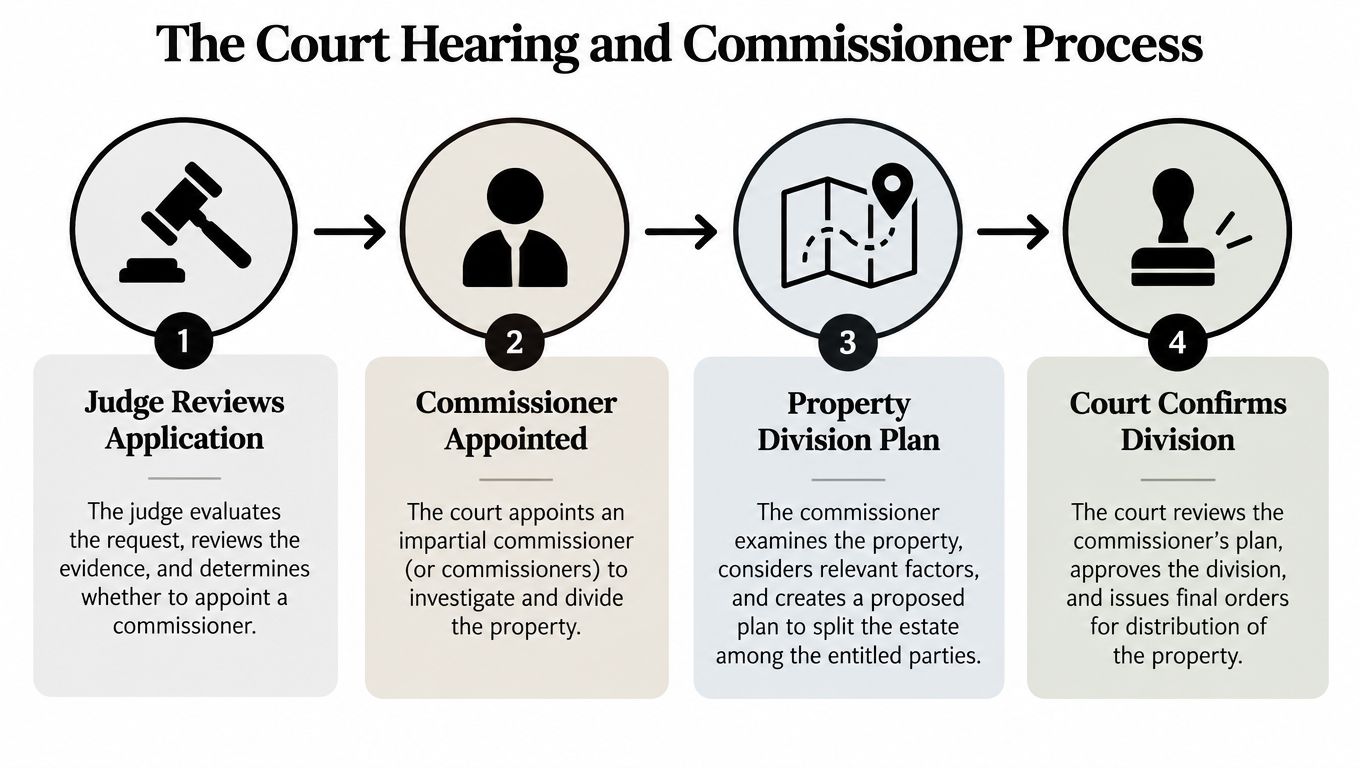
The Court Hearing and Commissioner Process
At the hearing, the judge must resolve three central questions. First, what residue of the estate is available for partition? Second, who is legally entitled to partition and distribution, and what are their respective shares? Third, did any entitled person receive an advancement that must be considered in calculating the division?
The residue isn't every asset currently sitting in an estate account. Texas law defines it after subtracting approved or judgment-established but unpaid debts and expenses, future debts that may be established by judgment, and probable future expenses of administration. This protects the estate from treating gross assets as if they were immediately available for beneficiaries.
How commissioners divide physical property
If the estate consists entirely of money or debts, a commissioner-led physical division may not be necessary. If the estate includes other property, the court appoints three or more discreet and disinterested commissioners. In plain English, these are neutral people expected to evaluate the property without a personal stake in the outcome.
The commissioners must make a “fair, just, and impartial” division. If real property can be divided without “manifest injury,” meaning without substantial harm to the property or the owners' interests, the commissioners should allot it in shares, by parcels, or through a combination of land and other property.
A family ranch may be divisible into separate parcels if each parcel has practical access and reasonably supports an heir's share. A small home on a single tract may not be fairly divided through a physical cut. In that situation, the commissioners may equalize shares with money or personal property. When shares are equal and the property cannot be sensibly assigned by agreement, allocation may be determined by lot. Section 360.151 addresses the commissioner process and the available methods of division.
What happens after the report
The commissioners prepare their proposed division for court review. The judge can then determine whether the plan complies with the statute and the beneficiaries' shares. A disagreement isn't automatically proof that the commissioners acted improperly, but a party may need to raise a specific objection supported by property records, valuation evidence, or evidence of unequal treatment.
The court's hearing schedule and required appearances can vary with the estate and the relief requested. Families can review an explanation of key hearings during probate administration while preparing questions for counsel.
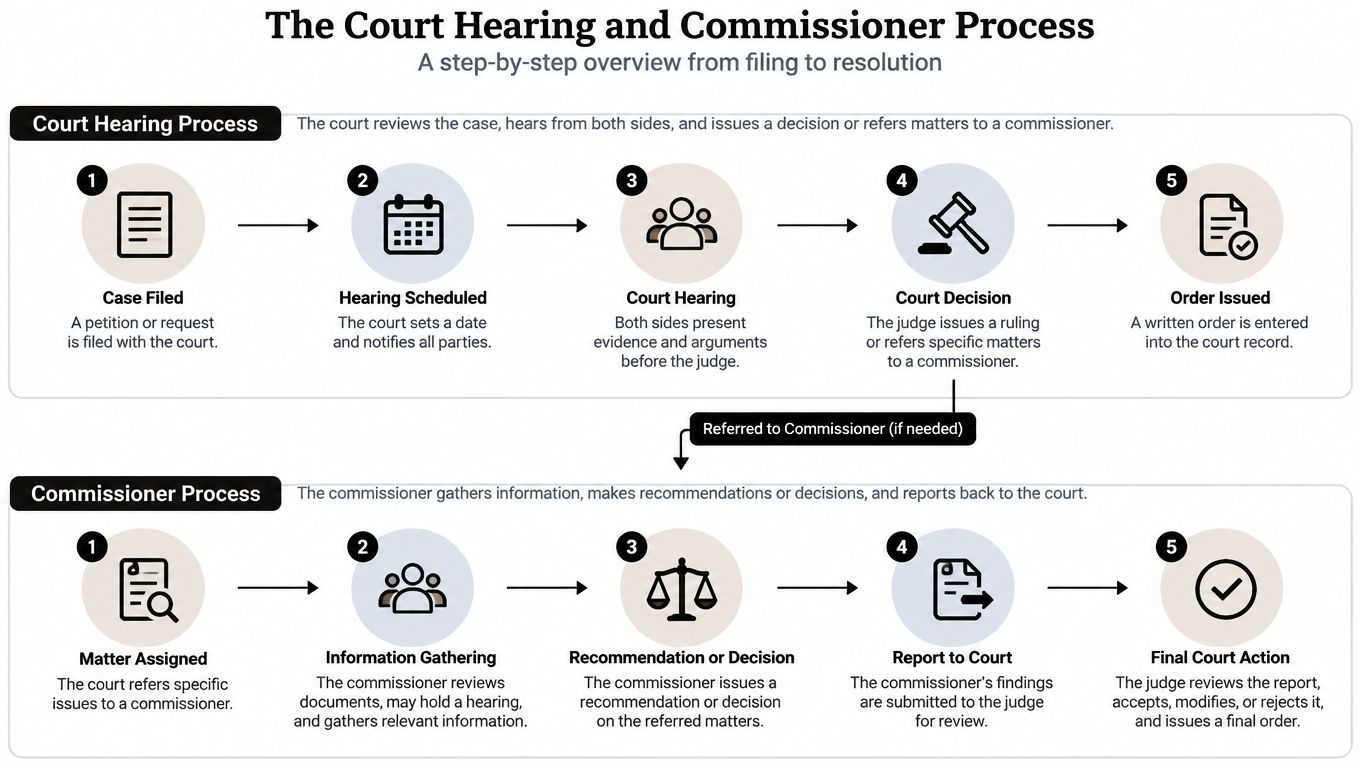
A short visual overview can also help families understand how the judge, commissioners, proposed division, and final approval fit together:
Real-World Scenarios and Common Disputes
Consider a parent who dies owning a rural tract of land, a modest bank account, and personal property. The parent had three children. During the parent's lifetime, one child received a substantial financial advancement, while the other children did not. The will or governing succession rules may affect the result, but the court still must examine whether the advancement changes the calculation.
At the hearing, the court determines the residue available for partition, the people entitled to shares and their respective interests, and whether an advancement was made. The residue is calculated after accounting for approved or judgment-established unpaid debts and expenses, future debts that may be established by judgment, and probable future administration expenses. An advancement is placed into hotchpotch under intestate succession rules, meaning it is counted back into the estate calculation so the shares can be adjusted fairly. Texas Estates Code Section 360.101 provides the supporting framework.
Land that cannot be divided cleanly
The children may initially agree that each should receive a portion of the rural property. But a survey may show that dividing it would leave one parcel without practical access or would substantially reduce the usefulness and value of the whole tract. Chapter 360 favors partition in kind when it can occur without manifest injury. When that isn't workable, the practical alternatives can become much harder for the family.
Independent legal research on Texas heirs' property describes the broader choice courts generally face between partition in kind and partition by sale. Partition in kind keeps land in the family through physical allocation. Partition by sale converts the property into proceeds for division. Neither result should be assumed without examining the land, title, access, valuation, and the beneficiaries' legal shares. Texas Estates Code Section 360.153 addresses the equitable treatment of property that cannot be divided without harm.
A family comparing this situation with disputes in another jurisdiction may find a general discussion of sibling partition action California useful for terminology. Texas probate partition still requires Texas-specific analysis.
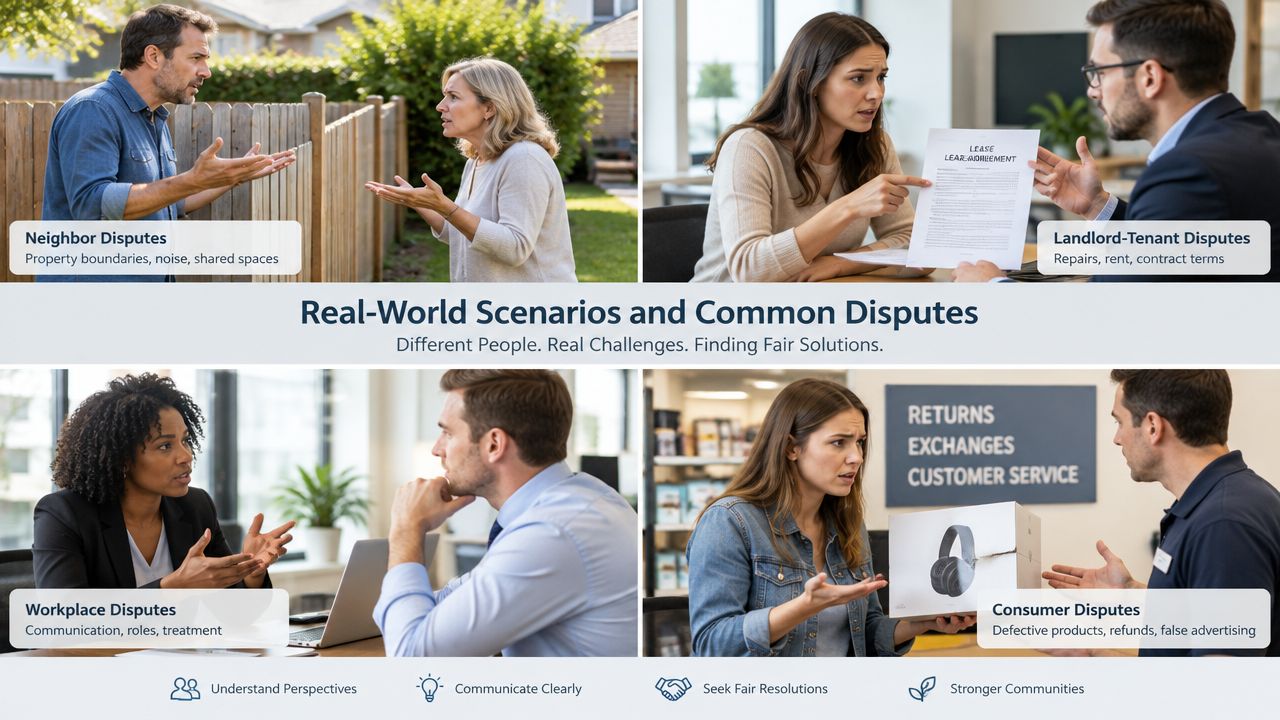
Common points of conflict
Disputes often arise when one heir wants to preserve family land and another needs liquidity. They can also arise when a beneficiary believes an earlier lifetime gift was ignored, when a minor's interest is unclear, or when an out-of-state heir cannot easily attend a hearing. A useful explanation of what happens when heirs disagree on selling property in probate can help families frame the disagreement before it becomes litigation.
The most productive response is usually evidence-based. Obtain a reliable property description, clarify the title, document the advancement, identify outstanding claims, and ask whether a proposed division produces equivalent value rather than merely equal acreage.
Key Takeaways for Executors and Heirs
Chapter 360 becomes easier to manage when the family treats it as a sequence of checkpoints rather than one dramatic final event.
- Confirm the anniversary milestone: Full partition generally becomes available after the first anniversary of the original letters testamentary or letters of administration.
- Separate full and partial relief: A partial distribution may be available earlier after the inventory, appraisement, and list of claims have been filed and approved.
- Identify every beneficiary: The application must name each person entitled to a share and state whether each person is an adult or minor.
- Protect creditors: Known creditors and other interested parties must receive required citation before the court considers a partial distribution.
- Address the refunding bond: A partial distribution to fewer than all heirs or devisees generally requires a refunding bond unless all interested parties waive it in writing.
- Calculate the net residue: Debts, expenses, possible future judgments, and probable administration expenses affect what is finally available.
- Prepare for land-specific review: Commissioners may divide land in kind, equalize shares with money or personal property, or use another equitable method when physical division would cause manifest injury.
- Document advancements: A prior gift may affect the final calculation through hotchpotch under intestate succession rules.
Key insight: The safest distribution is the one that can be explained from the court record, supported by property information, and understood by every person whose interest is affected.
Executors don't need to make every decision alone. Counsel may also need to coordinate with appraisers, title professionals, accountants, guardians for minors, or litigators. Families planning ahead can review Wills & Trusts services, while those protecting a child or incapacitated adult may need Guardianship guidance. If the dispute has already become adversarial, Probate Litigation may be relevant.
The process can feel burdensome after a loss, but each requirement serves a purpose. Clear records and careful communication can prevent avoidable conflict while protecting the people the decedent intended to help.
Frequently Asked Questions About Estate Distribution
Can an out-of-state heir participate in a Texas partition hearing?
Yes, an out-of-state heir can often participate through arrangements made with the probate court and counsel, but the exact method depends on the hearing, the county, and the judge's procedures. The heir should keep the court and executor informed of a current address, respond to citation, and discuss remote appearance, written consent, or representation with a Texas probate attorney well before the hearing.
What protections apply when a minor inherits?
The application must identify whether each person entitled to a share is a minor. A minor generally can't independently receive and manage estate property, so the court may require an appropriate representative and additional safeguards before approving the transfer. The proposed distribution should clearly account for the child's share, and the executor shouldn't release property informally to a parent or relative without court-approved authority.
Can an heir be forced to sell an inherited share of a family home?
An heir's preference to keep the home doesn't automatically prevent a court-supervised division or sale when the property can't be divided fairly. The court and commissioners consider whether partition in kind would cause manifest injury and whether shares can be equalized with money or personal property. Because a family home often carries emotional and financial significance, heirs should obtain legal advice before signing an agreement or consenting to a sale.
If you're facing probate in Texas, the Law Office of Bryan Fagan, PLLC can help evaluate a Chapter 360 partition, prepare for notice and hearings, address non-cash property, and protect heirs' interests during distribution. Contact the Law Office of Bryan Fagan, PLLC to discuss your estate and schedule a free consultation.


