A creditor may be holding an unpaid invoice, loan document, or other evidence of money owed by a loved one's estate. At the same time, an executor may believe that rejecting the claim ends the matter. In Texas probate, neither side can safely rely on assumptions. The Estates Code 355.060 ninety-day deadline to sue on a rejected claim can determine whether a creditor receives judicial review or loses the claim permanently, and the result may depend on whether the estate is under dependent or independent administration.
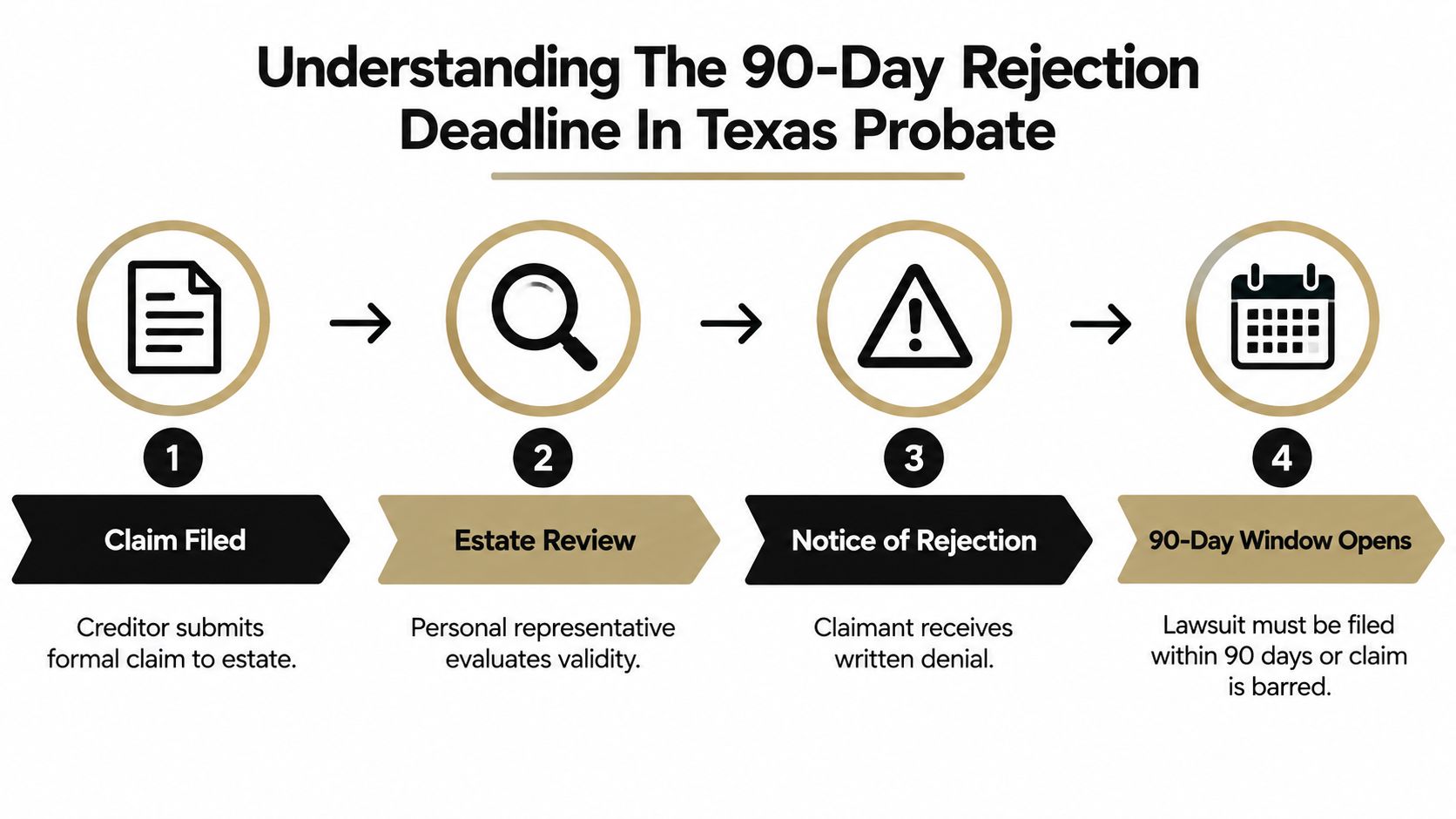
Understanding The 90-Day Rejection Deadline In Texas Probate
Suppose a personal representative receives a creditor's claim against the estate. After reviewing the documents, the representative rejects it. The creditor receives the rejection but waits, hoping the estate will reconsider or negotiate. Before long, the creditor may discover that the law required a lawsuit within a defined period after rejection.
Texas Estates Code § 355.064 provides that a claimant must commence suit not later than the 90th day after the date of rejection, or the claim is barred. The statute also gives the endorsed memorandum of rejection evidentiary weight in later litigation. Unless the rejection is denied under oath, the memorandum is taken as true. Texas Estates Code § 355.064 makes clear that this isn't merely an internal probate scheduling preference.
A Texas appellate decision from 2003 described the consequence plainly. When an estate claim is rejected, the claimant must file suit within 90 days or the claim is forever barred. The court applied that rule to a public creditor that failed to act in time, showing how a missed deadline can end an otherwise potentially valid debt.
Why the rule matters to families
The deadline serves two purposes. It gives a creditor a defined opportunity to challenge a rejection, while allowing an estate to move toward payment and distribution without an unresolved claim remaining open indefinitely. For a grieving family, that structure may feel unforgiving, but it also creates a process for deciding disputed debts.
Practical rule: A rejected claim deserves immediate legal attention. Waiting for a later conversation with the executor can put the creditor's recovery at risk.
The administration process can involve several separate duties, including identifying debts, reviewing documentation, and determining whether a claim should be paid or contested. Families can learn more about the timing and priority of those debts through Texas creditor claims in probate. The key question remains: What kind of administration is being used, and when did rejection occur?
When The Clock Starts Ticking On Rejected Claims
The lawsuit period doesn't begin just because a creditor submits a claim. It begins after rejection, but identifying that moment requires careful review of the estate's records and the governing probate rules.
A personal representative may expressly reject a claim by endorsing the rejection on the claim or by communicating a clear denial to the claimant. The claimant should preserve the rejection, the envelope or electronic transmission showing delivery, and every related letter or message. Those records can help establish the date from which the deadline is calculated.
Silence can create a different problem. Texas law provides a separate response period of 30 days for a personal representative. If the representative fails to act within the applicable period, the claim can be rejected by operation of law. In plain language, the creditor may not receive a letter saying “rejected,” yet the law can treat the claim as rejected because the representative didn't respond.
A simple timeline
- The creditor submits a claim. The claim should identify the debt and include supporting records.
- The representative reviews it. The representative may investigate whether the estate owes the amount and whether estate assets can pay it.
- The claim is rejected expressly or by operation of law. A written denial is one path. Failing to act within the statutory response period can be another.
- The claimant evaluates litigation promptly. Once rejection occurs, the claimant must determine whether a lawsuit is required to preserve the demand.
Handling Creditor Claims in Texas Probate addresses how estate debts are handled before assets are distributed. The important practical point is that a creditor shouldn't treat an unresponsive representative as evidence that the claim remains open forever. The rejection date, including a rejection created by inaction, may control the next legal step.
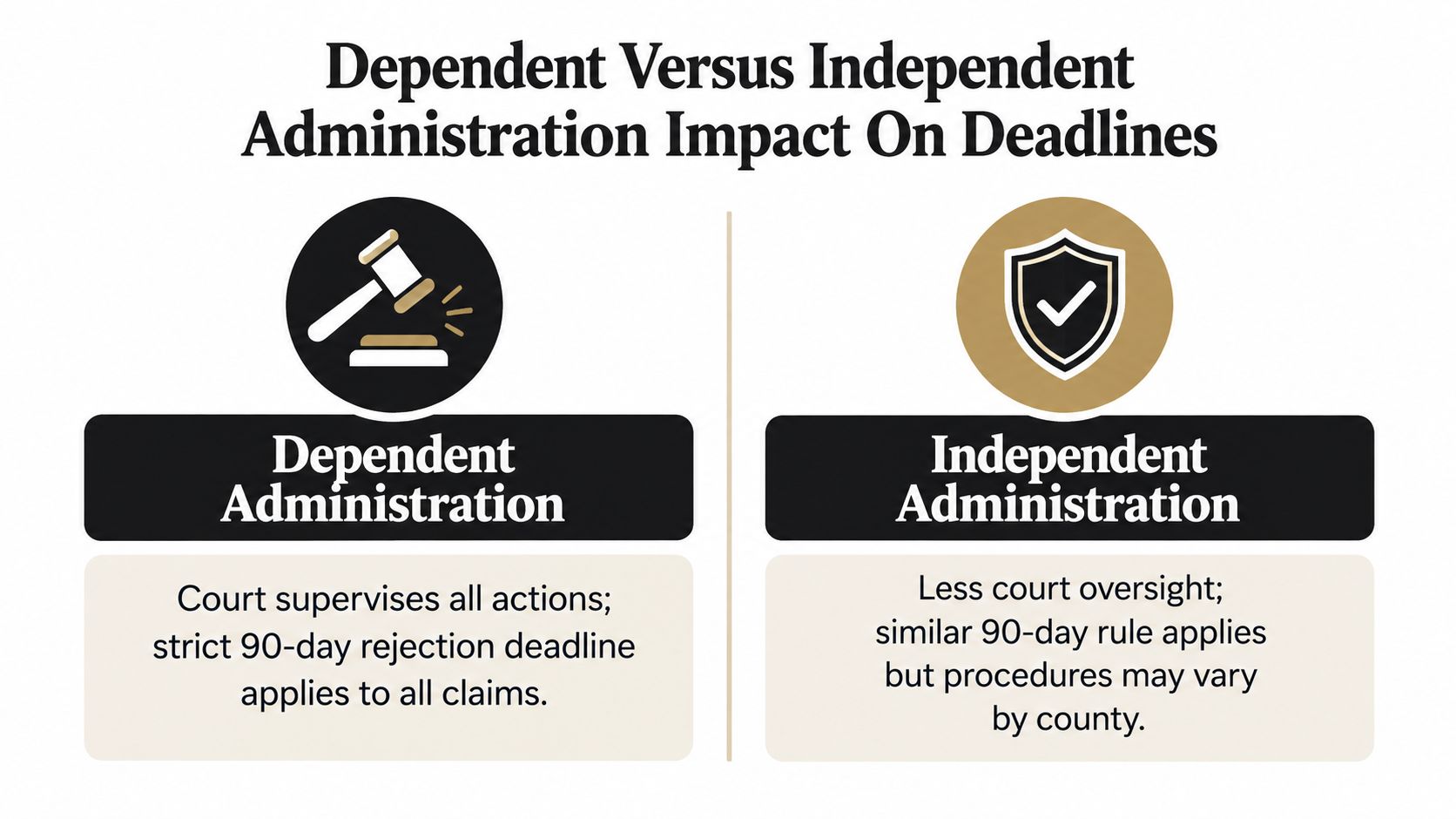
Dependent Versus Independent Administration Impact On Deadlines
The same rejected claim can have a different procedural consequence depending on the estate's administration type. Dependent administration involves closer court supervision, while independent administration generally gives the executor greater freedom to handle estate matters without seeking court approval for every action.
In dependent administration, the rejected-claim framework generally applies. A creditor whose claim is rejected may have to sue within the statutory period to avoid a permanent bar. The creditor's strategy therefore depends on promptly reviewing the rejection and confirming the estate's procedural posture.
Independent administration requires more caution before applying the same conclusion. Texas statutory commentary explains that Sections 355.064 and related provisions don't apply to independent administrations. A creditor's claim in that setting may not be barred solely because the creditor failed to sue within 90 days after rejection. Other provisions, notices, agreements, limitation rules, and court orders may still matter, so independent administration doesn't mean a creditor can safely wait.
The distinction in practical terms
| Estate structure | General effect of a rejected claim |
|---|---|
| Dependent administration | The statutory rejection process and lawsuit deadline generally control. |
| Independent administration | Sections governing the 90-day rejected-claim bar generally don't apply in the same way, and other rules may determine the creditor's options. |
Independent versus dependent administration in Texas can help families understand why the estate's court structure matters before anyone calculates a litigation deadline. A probate caption, court order, or Letters Testamentary may provide important clues, but a lawyer should review the actual file before a creditor or executor relies on a deadline conclusion.
How To Respond Properly When A Claim Is Rejected
A rejection isn't the end of every dispute, but it changes the claimant's position. The claimant must determine whether the estate is subject to the statutory 90-day suit requirement, identify the operative rejection date, and decide whether litigation is appropriate before the deadline expires.
An executor has a related responsibility. The representative should keep the claim, supporting records, rejection notation or notice, proof of delivery, and response history together. Clear documentation helps prevent later arguments about whether the estate acted, when it acted, and what the claimant was told.
Rejection scenarios and required actions
| Scenario | Deadline Start | Required Action |
|---|---|---|
| Express rejection | The date the claim is formally rejected under the applicable process | The claimant should obtain legal advice promptly and determine whether to commence suit within the applicable period. |
| Rejection by operation of law | The date rejection occurs after the representative fails to act within the statutory response period | The claimant should not assume silence preserves the claim. Counsel should calculate the resulting deadline from the records. |
| Rejection in independent administration | The statutory 90-day bar may not apply solely because of rejection | The claimant should identify other controlling rules, notices, agreements, and orders before deciding what to do. |
The executor's decision should also be deliberate. A representative who rejects a claim should understand how the rejection affects the estate and communicate it in a way that can be documented. Rejecting a creditor claim in Texas probate provides context for the representative's side of this process.
A creditor shouldn't file blindly, and an executor shouldn't assume that a rejection eliminates every risk. The right response depends on the estate type, the claim's documentation, the rejection method, and the applicable Texas Estates Code provisions.
Common Mistakes That Cause Claimants To Miss The Deadline
Many deadline problems begin with a reasonable but unsafe assumption. A creditor may believe the executor will call back, that settlement discussions pause the clock, or that an unpaid claim remains protected until the estate closes. Unless the parties have a legally effective arrangement or another rule applies, informal expectations may not protect the claim.
A representative can also create confusion by failing to track the response period. If the representative doesn't act within the applicable 30-day period, rejection may occur by operation of law. That can start the claimant's next stage without a traditional rejection letter.
Mistakes that deserve immediate attention
- Waiting for a voluntary payment: A creditor may spend valuable time negotiating without confirming whether a lawsuit deadline is running.
- Ignoring the estate structure: The 90-day rule generally has a different role in dependent administration than in independent administration.
- Misreading silence: No response doesn't necessarily mean the claim is pending. Rejection by operation of law may apply.
- Using the wrong date: The filing date, mailing date, receipt date, and rejection date can have different legal significance.
- Treating a valid debt as self-protecting: A genuine obligation can still face a procedural bar if the creditor doesn't preserve the right to judicial review.
A safer process for representatives
A personal representative should calendar the date each claim arrives, confirm the response requirement, and preserve proof of every action. The representative should also identify whether the estate is dependent or independent before sending a rejection, because the administration type affects the legal consequences.
A careful records system can't replace legal advice, but missing records can make a difficult probate dispute much harder to resolve.
Practical Steps For Executors Handling Rejected Claims
An executor's task isn't just to say yes or no to a creditor. The representative must manage the claim in a way that respects the estate's obligations, protects beneficiaries from avoidable disputes, and keeps the probate file clear.
Start with the estate's court documents. Confirm whether the administration is dependent or independent, identify the personal representative's authority, and review any orders that affect creditor notices or claim procedures. Don't assume that a process used in one Texas estate applies automatically to another.
A working checklist
Preserve the claim file. Keep the original submission, contracts, account statements, invoices, correspondence, and supporting proof in one organized record.
Check the response requirement. Track when the claim was received and determine whether the representative must act within the statutory response period. A missed response can create rejection by operation of law.
Choose a documented position. If the estate disputes the claim, the representative should create a clear record of the rejection rather than relying on an informal telephone conversation.
Communicate carefully. The notice should identify what was rejected and should be delivered through a method that preserves evidence of transmission and receipt.
Calendar litigation risk. After an express rejection, the estate should anticipate that a claimant may sue. In dependent administration, the statutory 90-day framework can make the timing especially important.
Coordinate before distribution. Estate assets shouldn't be distributed without accounting for unresolved debts, potential litigation, and the administration rules that govern the estate.
Why early review helps
A rejected claim can affect more than the creditor. Beneficiaries may face delays, the estate may incur litigation costs, and an executor may need to explain why a claim was accepted, denied, or left unresolved. Early legal review helps separate a disputed debt from an administrative mistake and lets the representative act before records disappear or deadlines become unclear.
The Law Office of Bryan Fagan, PLLC offers guidance on probate administration and probate disputes, including matters involving creditor claims. Families may also need advice about Texas Probate Process, Guardianship, Wills & Trusts, or Probate Litigation, depending on the broader circumstances.
Next Steps And When To Consult An Attorney
A rejected claim should trigger action, not uncertainty. Whether you're the creditor, executor, heir, or beneficiary, begin by collecting the probate case information, the claim, every rejection notice, and the communications surrounding it.
Then work through these questions:
- Is the estate in dependent or independent administration?
- Was the claim expressly rejected, or could rejection have occurred by operation of law?
- What date does the estate's record establish for rejection?
- Does the applicable Texas Estates Code provision require a lawsuit to preserve the claim?
- Are settlement discussions, court orders, or other facts affecting the analysis?
A Texas probate attorney can review those facts, explain the consequences in plain language, and help determine whether litigation or another response is appropriate. Legal guidance can also help an executor document the file, communicate with creditors, and avoid distributing assets before unresolved obligations are properly addressed.
Key insight
The 90-day rule isn't universal across every Texas estate. It is generally a serious deadline in dependent administration, while independent administration may be governed differently. Because the estate structure changes the analysis, identifying that structure should be one of the first steps after a claim is rejected.
If you're facing probate in Texas, our team can help guide you through every step, from filing to final distribution. Schedule your free consultation today.
If a rejected estate claim may affect your rights, Law Office of Bryan Fagan, PLLC can review the administration type, rejection records, and timing concerns with you. Contact the firm to discuss creditor claims, executor responsibilities, or probate litigation during a free consultation.