 Skip to content
Six years after her father's death, a Texas daughter opens a manila envelope from the back of a desk drawer. Inside is his handwritten will. By then, the family has already treated the estate as if no will existed. The house changed hands, a bank account was emptied, and one child who had been estranged from the family hasn't been consulted. The question at the kitchen table is simple, but the answer isn't: can the will still matter?
Texas law generally requires a will to be admitted to probate within four years after the testator's death, under Texas Estates Code § 256.003. The deadline runs from death, not from the date someone finds the document. After that point, a late filing becomes a fact-intensive dispute about diligence, notice, property transfers, creditors, and whether the applicant was legally “not in default.”
This guide explains how to probate a will after the deadline in Texas, what evidence courts examine, how the late-filing process works, where muniment of title may help, and which warning signs call for immediate legal advice. It also addresses a difficult reality: some deadline problems can be fixed, while others require the family to pursue a different legal route.
When a Will Gets Filed Years Too Late
Late-probate cases often begin with an ordinary family decision. Relatives believe there's no need for court involvement, agree informally about personal property, pay a few bills, and move on. Sometimes the original will was placed in a desk drawer, stored in a safe-deposit box controlled by another relative, or misdelivered with other papers. In other families, grief and conflict make everyone postpone the estate until the legal window is nearly gone.
The problem becomes more serious when people have already acted based on intestacy, meaning they treated the estate as though no valid will existed. A surviving spouse may have remarried. A new spouse may occupy the homestead. An heir may have signed an affidavit of heirship, sold an interest, or received property that the will would have given to someone else.
Practical rule: Finding the original will is important, but it doesn't reset the probate clock.
Under Texas Estates Code § 256.003, the default deadline is four years from the decedent's death. The statute creates a narrow exception when the person offering the will proves they weren't in default for failing to file sooner. Texas courts generally focus on reasonable diligence, not on whether the applicant acted quickly after the document was found. The Texas State Law Library's probate guidance describes the same basic structure, a four-year filing period with a possible late-probate path when the delay has an acceptable explanation.
A late case usually requires answers to several questions:
- When did the testator die?
- When did the applicant learn that the will existed and what it said?
- Who had custody of the original document?
- Did anyone open an estate or transfer property before the will surfaced?
- Are there unpaid debts, disputed assets, or heirs who may object?
- Can the applicant prove a reasonable explanation for the delay?
Families shouldn't assume that a late will is automatically meaningless, but they also shouldn't assume that a judge will accept it just because it appears authentic. A practical overview of the consequences appears in what happens if you miss a probate deadline in Texas, but the decisive issue in a late case is usually the evidence supporting the excuse.
The Four-Year Deadline Under Texas Law
A will signed shortly before death can still miss the probate deadline if no one files it in time. Under the four-year rule under Texas law (Texas probate four-year rule), the clock starts on the date of the testator's death. The signing date, the date the family finds the will, and the date an heir first recognizes the need for probate do not change that starting point.
Texas Estates Code § 256.003 sets the general deadline. After four years, the court generally cannot admit the will unless the applicant proves they were not in default for failing to offer it sooner. Good faith alone does not give the court authority to disregard the deadline. A late application must fit a statutory exception and include evidence supporting the explanation for the delay.
The practical calculation is straightforward. Confirm the death date, identify the fourth anniversary, and determine whether the application was filed by then. The harder question is what relief remains available after that anniversary has passed.
A timely application may support the ordinary probate process, including appointment of the executor named in the will and, when appropriate, independent administration. A late filing can narrow the proceeding. The will might be recognized, yet the applicant may not receive letters testamentary through the usual route. Letters testamentary are the court's formal authority for an executor to act on behalf of the estate.
The Four-Year Deadline to Probate a Will in Texas explains why Texas generally requires probate within four years of death. The rule protects more than court administration. Delay can allow property transfers, creditor claims, missing records, and reliance by people who received property under intestacy.
Texas Four-Year Probate Deadline at a Glance
| Question | Answer |
|---|---|
| What starts the clock? | The testator's date of death |
| What is the default period? | Four years to apply to admit the will to probate |
| What happens after the deadline? | The applicant must address the late filing and prove they weren't in default |
| Does finding the will restart the period? | No |
| Is late probate automatic? | No, the court evaluates the evidence and the statutory exception |
| Can every probate shortcut still be used? | No, late filing can restrict available remedies and authority |
Texas law also provides limited situations that require close statutory analysis. They can include an estate for which administration was not necessary, and a will offered within twelve months of death that was rejected solely because of form defects. These circumstances do not create a general waiver. The actual will, court record, prior orders, and estate history must be reviewed together.
Once the anniversary has passed, filing a standard application without a detailed diligence explanation creates a serious procedural problem. The application should address the deadline directly and identify the evidence supporting the requested exception.
What “Not in Default” Actually Means
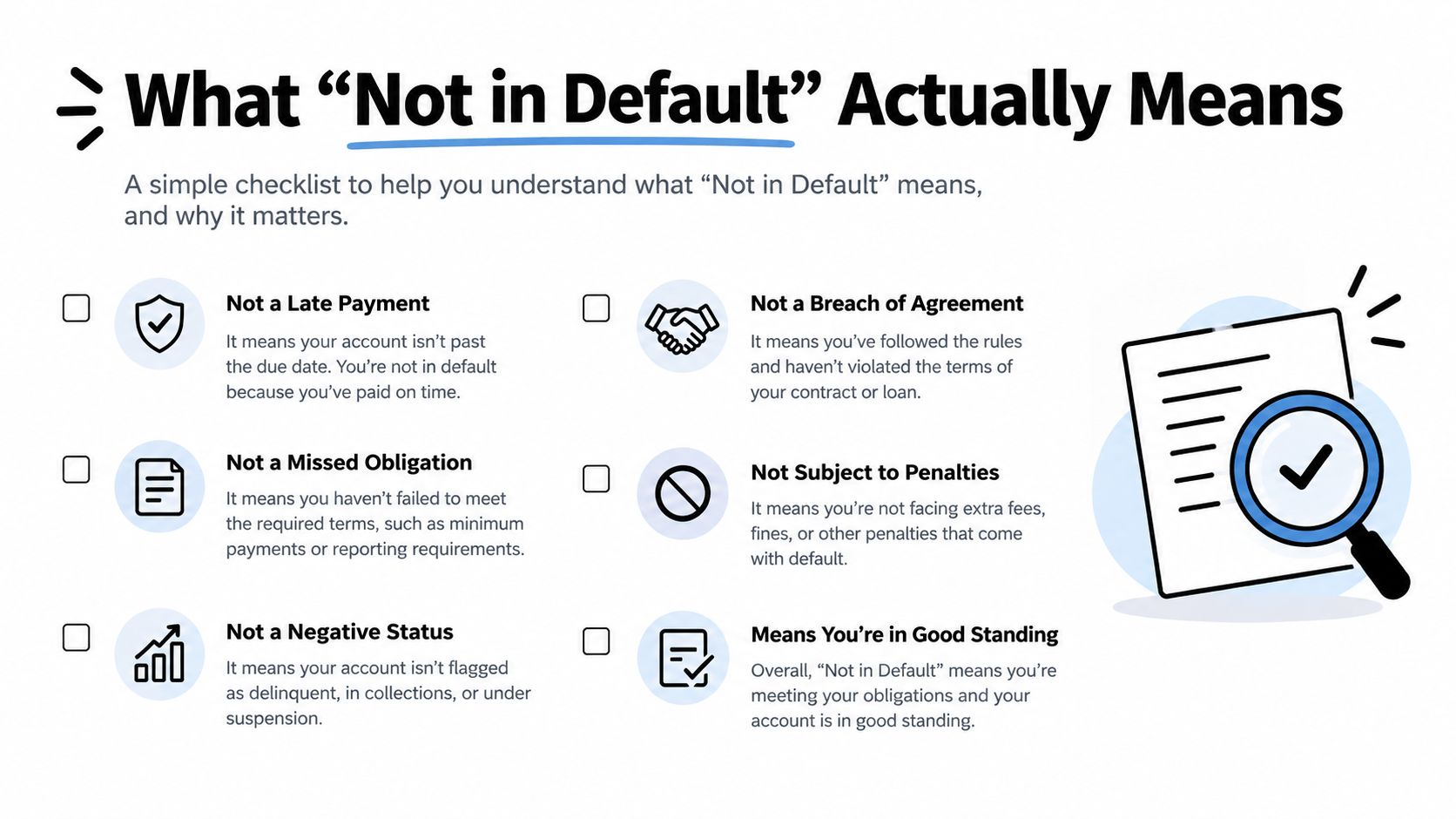
“Not in default” doesn't mean the applicant was merely unaware of the law. It refers to whether the failure to file resulted from the applicant's lack of reasonable diligence. Texas courts generally examine two connected questions: was the failure someone's fault, and did the applicant act within a reasonable time after learning about the will or acquiring the right to file?
The court may consider credible evidence that the applicant didn't know the will existed. A document held by a third party, hidden among personal records, misdelivered, or discovered only after another custodian's death can provide a meaningful explanation. The facts must be specific. A vague statement that “the family didn't know” usually leaves important questions unanswered.
Judges may focus on:
- Custody: Who possessed the original will, and why couldn't the applicant access it?
- Knowledge: When did each relevant person learn of the document?
- Authenticity: Is the original available, and does it include a self-proving affidavit?
- Follow-through: What did the applicant do after discovering the will?
- Family conduct: Did anyone conceal the will, discourage filing, or transfer estate property?
- Delay: How much time passed after actual knowledge, and what explains that period?
Evidence that can support diligence
A sworn affidavit from the applicant can establish the timeline, but it usually carries more weight when supported by independent evidence. A witness who stored the will, correspondence showing when it was delivered, safe-deposit-box records, and testimony from people involved in the discovery can help the judge understand what happened.
The original will matters because the court must determine whether the document is genuine and legally admissible. A self-proving affidavit can simplify witness proof, but it doesn't by itself excuse a late filing. The applicant still has to explain the delay.
Excuses based only on grief, unfamiliarity with probate law, family disagreement, or general inaction often create problems. A person may have had a difficult period after a death, but the court still needs a concrete explanation showing why the failure wasn't negligent.
The critical date is often the date of actual knowledge, not the date of death.
That doesn't eliminate the four-year rule. It explains why a late petition can turn on a detailed factual record. Courts may reach different conclusions because the evidence, witnesses, property history, and judge's assessment of diligence differ from case to case. This is the most contested issue in many late-probate proceedings, which is why a petition should be prepared as an evidentiary case rather than a routine filing.
Your Three Options After the Deadline
After the four-year period, the right route depends on the will, the estate's property and debts, earlier transfers, and whether interested people can be located and served. The three paths have different purposes and risks.
| Option | Best When | Key Limitation |
|---|---|---|
| Late probate under the exception | The applicant can prove they were not in default and the will should control | The court must accept the explanation for the delay |
| Muniment of title | The main goal is transferring title without full administration | Texas Estates Code § 257.054 requires filing within four years |
| Administration by an heir | The will cannot be admitted, but estate property still needs lawful administration | Distribution follows available legal authority, not necessarily the rejected will |
Late probate under § 256.003 is the most direct way to preserve the decedent's testamentary plan. It may fit when no administration has been opened, the original will has surfaced, and the applicant can show the delay was not caused by negligence. Evidence of diligence matters here, including when the will was found, who possessed it, and what steps the family took before filing.
Prior heirship affidavits or property transfers do not automatically end that possibility. They do create additional issues. The court may need to address notice, competing claims, and whether third parties relied on earlier transfers. Those facts can affect both the requested relief and the expense of correcting prior transactions.
Muniment of title is narrower. Under Texas Estates Code § 257.054, the application must be filed before four years have elapsed between the death and the application. The procedure can work when the estate has few debts and the main need is to transfer title to real property without full administration. It does not cure a missed deadline.
For example, a family may need to retitle a parent's house. If the will was timely filed and the estate does not require full administration, muniment of title may be efficient. If the will surfaced after the statutory period, the family must resolve the timing issue before relying on that procedure.
Administration by an heir may be available when the will cannot be admitted and property still needs a lawful representative. It can address estate administration, but it does not revive the will. Before choosing this route, review the assets and debts, identify heirs and devisees, determine whether creditors remain unpaid, and check whether anyone has already sold or transferred estate property.
Filing the Late Probate Petition
A late application should tell a complete story, not just attach a will and ask the judge to overlook the date. The court needs jurisdiction, the death date, the procedural history, the original document, the interested parties, and a specific explanation of diligence.
Preparing the application
The process generally begins with a jurisdiction review. Counsel or the applicant should confirm the proper Texas county or statutory probate court, verify the date of death, search for any existing administration, and determine whether another court has already entered an order affecting the estate.
The application to admit the will should identify the decedent, the applicant, the will, the requested relief, and the people entitled to notice. A late filing should include a sworn account of when the applicant learned of the will, who had possession of it, what efforts were made to locate or verify it, and why earlier filing wasn't reasonably possible.
Supporting materials may include:
- The original will, not merely a photocopy, when available.
- A self-proving affidavit, if the will contains one.
- The death certificate and information establishing venue.
- Affidavits from custodians and witnesses explaining discovery and possession.
- Documents showing diligence, such as correspondence or records concerning the will.
- A complete list of heirs, devisees, and addresses for notice.
The applicant must also address whether letters testamentary are legally available. A late filing may permit recognition of the will in some circumstances while limiting the authority the court can issue. The requested order should match the remedy the statute permits.
Notice and the hearing
After filing, the applicant pays the required court costs, obtains a docket setting, and arranges the required service. Interested heirs and beneficiaries may receive citation by certified mail or sign waivers, depending on the circumstances. If unknown, incapacitated, or unrepresented interests require protection, the court may appoint an attorney ad litem.
At the hearing, the judge may ask when the will was found, why the custodian didn't file it earlier, what happened to the estate, and whether anyone relied on an intestate transfer. Witnesses may testify about the will's custody and execution. The judge can admit the will, deny the application, request additional proof, or issue an order suited to the relief legally available.
A general explanation of filing a probate application in Texas can help families understand the filing mechanics, but a late petition requires additional preparation focused on default and diligence.
The video below provides general background on probate procedure. It isn't a substitute for advice about a late filing.
The signed order is only one milestone. Afterward, the representative may need to record documents, address title, communicate with creditors, collect assets, and distribute property consistently with the court's authority.
A Late-Filing Case From Start to Finish
Consider a representative case involving a will found two-and-a-half years after death in a lockbox. No administration has been opened. The decedent left three adult children, one homestead, and a small list of creditors whose claims have already been satisfied.
The first intake meeting focuses on facts, not assumptions. The attorney obtains the death certificate, confirms that no prior administration exists, secures the original will, and interviews the people who can explain the lockbox and the self-proving affidavit. The family also gathers the deed, mortgage information, account records, creditor receipts, and contact information for all children.
Building the factual record
The applicant signs a diligence affidavit describing who knew what and when. The lockbox custodian explains why the will wasn't available earlier. If the will was held by someone outside the applicant's control, that fact is documented carefully rather than summarized with a general statement that the family “couldn't find it.”
The non-applying children receive the required notice or waive service where appropriate. The application is placed on the probate docket, and the court addresses whether an ad litem is needed to protect an unknown or legally unrepresented interest.
At the merits hearing, the custodian testifies about possession and discovery. The judge asks why the applicant didn't file sooner, whether anyone opened an estate, and whether any property was transferred. The ad litem may file a brief addressing the interests they were appointed to represent. The judge then decides whether the evidence proves the applicant wasn't in default and whether the will meets the requirements for admission.
If the court grants the application, the order admits the will and may issue letters testamentary if the law allows that relief in the particular case. If the court denies the application, the family may need to consider administration under another legal theory or address disputed transfers through litigation.
After the order, the representative handles the practical work. For the homestead, that may include recording the probate order or other required instruments, confirming title requirements, and distributing the property according to the order. The case doesn't end when the judge signs. It ends when the estate's assets, debts, records, and transfers have been properly addressed.
When to Hire a Probate Attorney and What Comes Next
A family should speak with a Texas probate attorney as soon as a deadline problem appears. That is especially true when the four-year period has passed, an heir or creditor has objected in writing, the original will was lost and later found, real estate changed hands informally, or a beneficiary already received or sold an asset.
DIY filings most often fail where the case requires proof rather than forms. The applicant may not explain diligence with enough detail, serve every interested person correctly, or establish the will's execution and authenticity. A late application also creates a record that can affect later disputes, so an incomplete filing may do more than delay the estate.
What counsel should investigate
An attorney may begin by collecting death and marriage certificates, reviewing deeds and financial records, locating witnesses, and determining whether the original will includes a self-proving affidavit. Counsel can prepare a verified petition invoking § 256.003(b), develop testimony about the will's custody, and present the evidentiary hearing in a way that gives the judge a clear timeline.
The firm's broader Texas Probate Process resources can help families understand administration generally. Other matters may require different services, including Guardianship, Wills & Trusts, or Probate Litigation, particularly when capacity, disputed transfers, or a contest is involved.
Families should gather the original will, list every known asset and debt, identify all heirs and devisees, preserve texts and emails about the document, and stop informal transfers until counsel reviews the situation. The Law Office of Bryan Fagan, PLLC helps Texas families evaluate late probate, prepare filings, and handle hearings with step-by-step guidance.
Takeaway
The four-year rule is serious, but a missed deadline isn't always the end of the analysis. The outcome often turns on whether the applicant can prove a specific, credible explanation for the delay and show reasonable diligence after learning about the will.
If the will has surfaced late, don't wait while more facts become harder to prove. Contact the Law Office of Bryan Fagan, PLLC for a free consultation, bring the original will and death certificate, and ask counsel to evaluate the deadline, available remedy, notice requirements, and risks before anyone transfers more property.
If you're facing probate in Texas, our team can help guide you through every step, from filing to final distribution. Schedule your free consultation today. Visit Law Office of Bryan Fagan, PLLC to discuss whether a late-probate exception, muniment of title, or another estate procedure fits your family's circumstances.


