 Skip to content
Your phone buzzes while you're sitting at the kitchen table after a funeral, and the message is about the house, the bank account, or the family business. One sibling wants to keep everything moving. Another one says they may want to refuse what they were left so the property can pass somewhere else. That moment can feel awkward, even disloyal, but in Texas probate it can also be a careful legal choice.
A disclaimer of inheritance is often the right word for a human decision. Sometimes the beneficiary doesn't want the asset, sometimes the asset comes with debt or upkeep, and sometimes the family wants the property to pass in a different direction because the estate plan or family circumstances make that path more practical. Under Texas law, that choice has a formal process, real deadlines, and a few traps that families don't always see until it's too late. The Texas Probate Process can be especially confusing when grief, money, and family expectations all land at once, so it helps to slow down and understand what the law allows.
When a Texas Family Faces the Decision to Disclaim
A son inherits his mother's Houston home. He already has a stable place to live, and his sister has a child with special needs, so the family starts wondering whether the house should pass to the sister instead. Nobody wants to look greedy, and nobody wants to insult their mother's wishes, but the question is practical, not emotional. Can the son refuse the inheritance, and if so, will Texas law let the property move where the family hopes it can go?
That's where How to Avoid Probate in Texas can help frame the larger estate-planning picture, but a disclaimer is a different tool. It doesn't erase the estate, and it doesn't rewrite the will. It removes one beneficiary from the line of receipt if the law's conditions are met.
The first question is whether the asset is worth taking
Families usually ask about a house first, because a house can bring maintenance, taxes, insurance, and emotional pressure. A bank account can seem easier, but it can still create family tension if the money is needed to pay estate expenses or support a dependent heir. A business interest can be even more delicate, because ownership and management aren't the same thing.
Practical rule: if the inheritance comes with work, debt, or family conflict, don't assume “keeping it” is the only respectful choice.
The decision is whether the beneficiary wants to accept the property at all, and whether refusing it would help the estate or just move the problem somewhere else. That question matters because a valid disclaimer changes who gets the property, but it can also affect taxes, creditor issues, and the estate's ability to function smoothly.
What a Disclaimer Actually Is Under Texas Law
A Texas disclaimer is a formal written refusal of an inheritance. It is not the same as ignoring the property, and it's not the same as signing the house over to someone else after you receive it. Texas law treats a valid disclaimer as if the beneficiary never owned the disclaimed property in the first place, which is why the law calls it a relation back rule. Under that legal fiction, the disclaimant is treated as if they died before the decedent, and the property passes as though they were never in line to receive it. See the Texas probate code discussion of disclaimer effectiveness and timing in the Texas Probate Code materials.

That legal fiction matters because it changes the probate path. If the disclaimer is valid, the property doesn't go to the disclaiming beneficiary and then get transferred onward by choice. It passes under the will, the contingent gift language, or the intestacy rules that already exist. Texas law also ties the effectiveness of the disclaimer to the decedent's death, which is why the timing and delivery rules matter so much.
Plain-English glossary for the rest of the article
- Beneficiary: the person named to receive property.
- Disclaimant: the person refusing the property.
- Personal representative: the executor or administrator who handles the estate.
- Relation back: the rule that treats the disclaimant as if they predeceased the decedent.
- Acceptance: conduct that shows the beneficiary has already taken ownership or benefits.
The biggest mistake families make is assuming a disclaimer is informal. It isn't. Texas probate law treats it as a legal filing with consequences, and once a beneficiary has accepted the property, the disclaimer can fail.
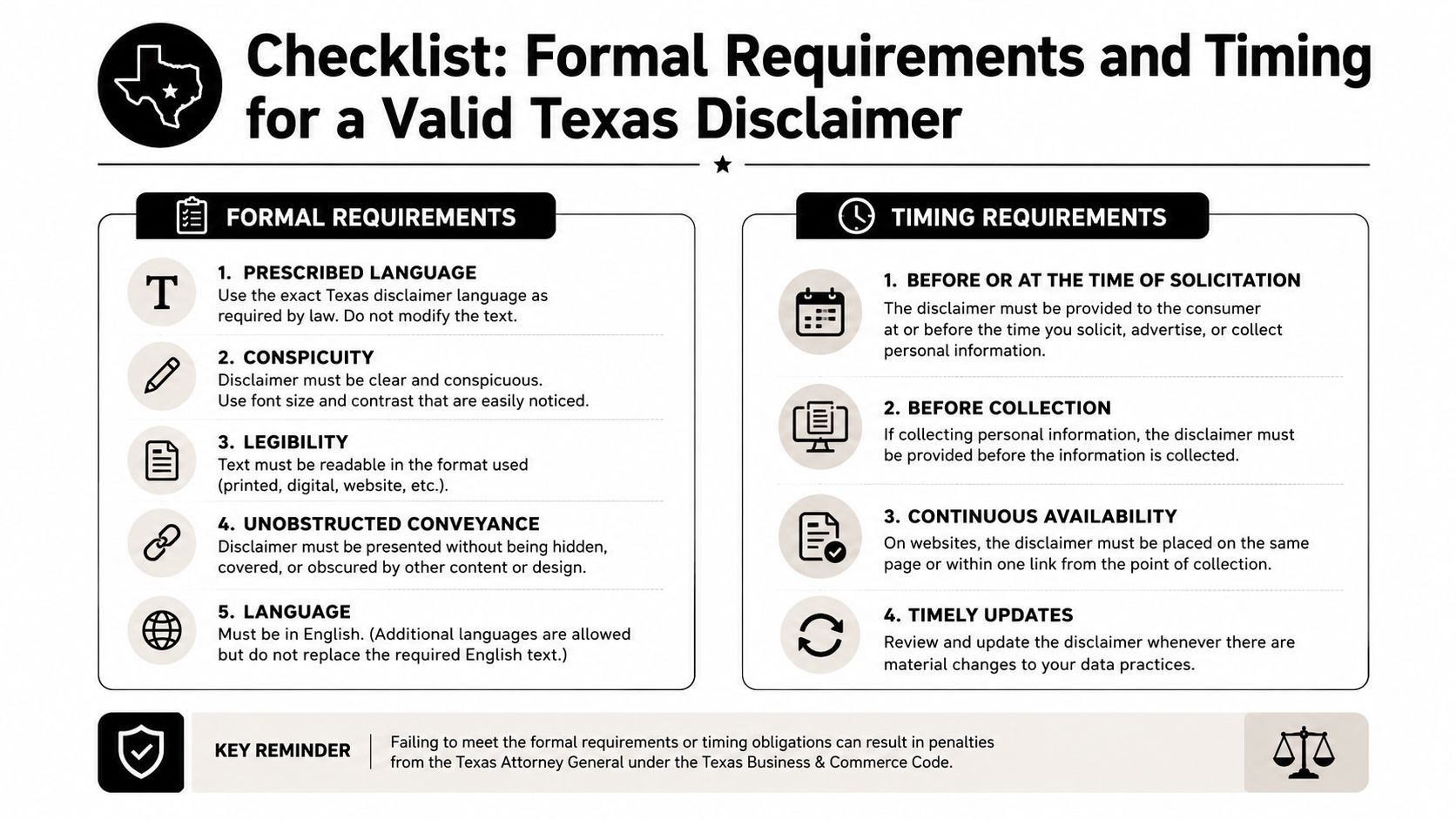
Formal Requirements and Timing for a Valid Texas Disclaimer
A Texas disclaimer has to be done the right way the first time. For an inherited interest created by a will or intestacy, Texas requires the disclaimer to be in writing, signed, and to describe the disclaimed interest with reasonable certainty. For a present interest, the historic Texas rule required the memorandum of disclaimer to be filed no later than 9 months after the decedent's death, and for a future interest, the deadline ran 9 months after the event that finally identified the taker and vested the interest. The filing and delivery mechanics matter because a disclaimer is generally not effective until it is properly delivered or filed. See Texas Property Code section 240.102.
Where the disclaimer gets delivered or filed
Texas law gives families two main paths. The disclaimer can be delivered to the estate's personal representative, or if no personal representative is serving, it can be filed in the county public records where the decedent was domiciled or owned real property. That filing location matters because a disclaimer that sits in a drawer doesn't help anyone.
The federal tax deadline is separate but equally important. For a disclaimer to qualify under Internal Revenue Code Section 2518, it generally must be made within 9 months of death, or within 9 months of turning 21 for minors. That deadline appears in the case materials discussing qualified disclaimers and should be treated as a hard planning checkpoint. Texas families often need to satisfy both the probate timeline and the tax timeline at the same time, not one after the other.
Here's a quick checklist to keep in mind:
| Requirement | What it means |
|---|---|
| Written form | The refusal must be on paper or another legally recognized writing |
| Signature | The beneficiary must sign it |
| Clear description | The property or interest has to be identified clearly |
| Proper delivery | Deliver to the personal representative or file in the right county records |
| Timing | Act within the applicable nine-month window |
For broader estate administration questions, Non-Probate Assets: What Skips Probate in Texas is useful because some assets never enter this process at all.
How Disclaimed Property Moves Through the Estate
A disclaimer doesn't let the beneficiary pick a new recipient. It only removes that person from the path. After that, Texas law follows the estate plan or the intestacy rules already in place.
| Situation | What happens to the disclaimed share | Practical takeaway |
|---|---|---|
| Will with a contingent gift | The property passes to the alternate beneficiary named in the will | The decedent's own backup plan controls |
| Will with a residuary clause | The share falls into the residuary plan and goes with the rest of the residue | The will's leftover bucket may control the result |
| Intestate estate | The share passes as if the disclaimant had predeceased the decedent, under Texas intestacy rules | The next heirs in line receive it under law |
If a Texas will says, “to my son, but if he does not survive me, to his descendants,” the disclaimer usually follows that roadmap. If the will is silent, the residue clause or the intestacy rules fill the gap. In a family with no will at all, the disclaimer sends the share through the Texas order of distribution as though the disclaimant had died first. The Texas intestacy rules matter because they determine who is next in line when no testamentary backup language controls.
The practical limit on choosing a new recipient
Families often face confusion here. A daughter can't disclaim her father's ranch and decide, on her own, that her cousin should get it instead. The disclaimer only removes her from the line of receipt. Texas law then sends the property to the next taker under the will or the statute.
If the will or intestacy law doesn't send the property where the family wants, a disclaimer won't fix that problem.
That's why the question is not just “Can I refuse it?” The deeper question is “Where does it go after I do?” If the answer isn't acceptable, the family may need a different probate strategy.
Tax and Creditor Consequences Texas Families Should Weigh
The tax and creditor effects are why many families even consider a disclaimer. Under the relation back rule, the disclaimant is treated as if they never owned the property, so the asset generally isn't pulled into the disclaimant's own estate on that basis. That can matter in a large estate or in a family trying to preserve flexibility for a later transfer. The federal qualified disclaimer rules under IRC Section 2518 are part of that planning picture, and the Texas materials discussing relation back and qualified disclaimers explain why timing is so important.
Texas creditor issues follow the same logic. If the beneficiary never accepted the property, the disclaimant's personal creditors generally have a harder time reaching it. But the estate's own creditors still come first in probate administration, because the personal representative has to deal with debts and expenses before distribution. For a broader view of that probate sequence, Who Pays Taxes During Probate in Texas is a helpful companion topic.

When disclaiming helps, and when it complicates life
A disclaimer can help when a beneficiary already has enough assets, faces personal creditor pressure, or wants the property to pass under the estate's next-in-line rules. But refusing a probate asset isn't always a clean win. It can create liquidity problems if the estate needs that asset to pay bills, it can concentrate value in an heir who may not be ready to manage it, and it can shift ownership to a family member the disclaimant never would have chosen.
That tradeoff is one reason probate planning should stay grounded in the family's real situation. A disclaimer is a tool, not a moral test.
For families also dealing with real property, storm damage, or insurance claims, practical asset handling matters too. A resource like H-Towne & Around Remodelers storm claim tips can be useful when an inherited property needs immediate attention and the family is trying to preserve value during a stressful transition. The probate decision and the property-management decision often happen at the same time.
Key insight: the best tax answer can still be the wrong family answer if it creates cash-flow or control problems.
The Acceptance Problem That Kills Most Texas Disclaimers
The biggest real-world question is not whether the beneficiary wants the inheritance. It's whether they already acted like an owner. Texas law says the beneficiary cannot have already accepted benefits from the property before disclaiming, and that line gets blurry fast when the asset is a house, a rental, or a family heirloom.
Paying property taxes on an inherited house can be a problem. So can collecting rent from a duplex, moving into the home, making repairs, or depositing a dividend check from an inherited account. Even small acts can be read as acceptance depending on what they show about control and ownership. A family member who changes the locks to protect the property may think they're preserving it, but a court may later ask whether that person was already exercising ownership.
Preservation is not always the same as acceptance
There's no simple universal rule that says every cleanup step destroys a disclaimer. Courts look at the overall conduct, especially whether the beneficiary showed intent to accept the property. That means some protective actions may be defensible, but a person who starts using the property as their own is taking real risk.
Moving a family heirloom can also create problems if the item is treated like inherited personal property rather than merely being safeguarded. The same goes for accepting an early distribution from the executor and then trying to disclaim the rest. Once the beneficiary has taken benefits, the disclaimer can lose force.
A narrow disclaimer may still be possible in some situations, but that's not something to guess about. If the beneficiary has already touched the property in a way that looks like ownership, they should stop and get legal advice before filing anything.
A good rule of thumb is simple, if an owner would normally do it, treat it as a warning sign.
A Sample Texas Disclaimer and How It Actually Gets Filed
A daughter is named in her father's will to receive a Dallas rental property. She doesn't want to manage tenants, and her brother already handles rentals professionally. She asks whether she can disclaim the house so it passes to him under the will or intestacy rules. That's the right kind of question, because it focuses on both the legal effect and the family consequence.
First, the daughter prepares a written disclaimer that clearly identifies the property and the interest she is refusing. A plain-English version might say that she, by name, disclaims all right, title, and interest in the Dallas rental property described by legal description, under the decedent's will, effective as of the date allowed by Texas law. She signs it, and if the property is real estate, the document should be handled so it can be recorded in the proper county records if needed.
Filing steps that keep the process clean
- Notify the executor. Let the personal representative know the beneficiary intends to disclaim.
- Gather the estate documents. The will, letters testamentary, and property description should all be reviewed together.
- Draft the disclaimer carefully. The property must be described clearly enough that there's no confusion.
- Sign and deliver it. Send it to the executor or file it in the proper county records if no representative is serving.
- Record it if real property is involved. County recording protects the chain of title.
- Avoid further use. Don't collect rents, make unilateral repairs, or act like the owner after deciding to disclaim.
- Confirm the estate's next taker. Make sure everyone understands where the property passes next.
- Get legal review before deadline. A missed timing issue can undo the whole plan.
If the disclaimer is rejected as ineffective, the family may need to look at probate litigation, estate administration, or a different transfer strategy. Our firm's work in Probate Litigation and estate administration can help families sort out whether the problem is the document, the timing, or the prior acceptance.
Key Takeaways and When to Call a Texas Probate Attorney
A Texas disclaimer only works when every required piece fits together. It must be in writing, signed, delivered or filed correctly, made within the applicable nine-month window, and completed before the beneficiary accepts any benefit from the property. If even one of those steps is missing, the disclaimer can fail.
The hardest mistakes usually happen during a grieving, practical moment. A family member may pay a utility bill, collect rent, move a family heirloom, or otherwise treat the property like it is already theirs before getting legal advice. Those actions can count as acceptance, and once that line is crossed, the disclaimer may no longer be effective. Families also sometimes assume a disclaimer lets them choose who gets the property next. It does not. The disclaimer only removes the beneficiary from the line of receipt, and the will or Texas intestacy law controls the next transfer.
A successful disclaimer can still create problems if the family has not thought through the rest of the estate. Property that is disclaimed may shift in a way that helps one goal and hurts another, especially if the family was hoping to preserve liquidity, avoid creditor pressure, or keep more control over who ends up with the asset. Those are not abstract concerns. They often become the central issue after the disclaimer is signed.
If you want more background on how probate fits together, our page on the Texas Probate Process can help you understand the larger administration picture. If you are unsure whether a disclaimer is still available, that is the point to slow down and get clear advice before anyone takes a step that cannot be undone.
If you are facing probate in Texas, our team can help you sort out whether a disclaimer is still open, whether someone has already accepted the property, and what the estate can do next. The Law Office of Bryan Fagan, PLLC helps Texas families handle probate, disclaimers, and estate administration with clear guidance and practical next steps, so you can make a decision that fits the legal rules and your family's real-world needs.


