 Skip to content
Maria has barely had time to breathe. Her husband's suit is still hanging by the door, the kitchen table is covered with sympathy cards, and now she's holding a manila envelope marked Important Papers while trying to keep her children fed, calm, and out of the legal weeds. If that sounds familiar, take a breath. How to settle an estate in Texas starts with a few steady choices, not a sprint, and Texas law gives families more than one path depending on the will, the debts, and the property involved.
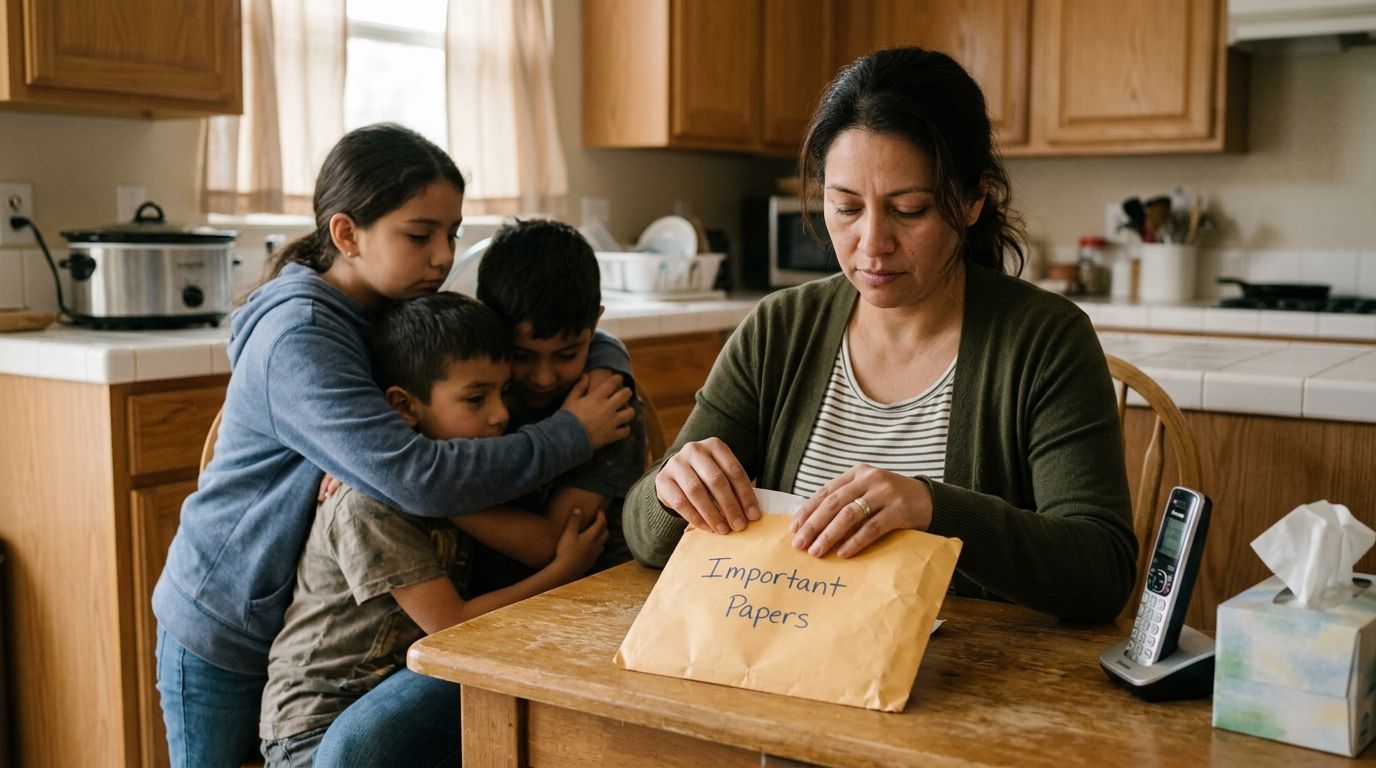
A Texas family's first week after a loss
Maria doesn't need to file a court case on day one. What she needs is order. She should look for the original will, secure the home and vehicles, and make sure no one starts moving money around before she understands what's in the estate. It also helps to request multiple certified death certificates, because banks, insurers, and title companies usually want their own copies.
Practical rule: the first week is about protection, not perfection. Keep bills paid from known accounts only, and don't let anyone “borrow” estate property just to make things feel fair.
If Robert had an employer, Maria should notify the employer and Social Security so benefits and payroll issues are handled correctly. If there are jointly held accounts or a home owned with right of survivorship, those assets may pass outside probate, so she shouldn't assume everything has to wait for court. Families sometimes find real comfort in stepping back from the paperwork for a few hours, and grief support can matter just as much as legal support, which is why Interactive Counselling services can be a helpful resource for people who need a place to process the loss while they handle the practical side.
Maria's bigger question is simple. Does this estate need a full probate case, or can it move through a lighter Texas process? Texas families usually end up in one of four lanes, independent administration, dependent administration, muniment of title, or a small estate affidavit. The right answer depends on the will, the debts, and what kind of property Robert owned.
For immediate next steps, Maria can also keep one legal checklist nearby: what to do immediately after a loved one dies in Texas. It won't solve everything, but it will keep the first week from becoming a blur.
Finding the Will, the Heirs, and Whether You Even Need Probate
A grieving spouse often starts with a simple question, where is the will, and what happens if it cannot be found right away? Under Texas Estates Code rules, the will controls who inherits and who can serve as executor, but only if the original can be located and proved in court. If the will names an independent executor, that often points toward a simpler route under Texas Estates Code Titles 2 and 3, instead of a court-supervised administration.
Start with the papers, then the people
Look in the places people usually keep important documents, a safe, a filing cabinet, a desk drawer, or with the lawyer who drafted the will. If the original will is missing, Texas law may still allow probate in some situations, but the process becomes more complicated, and families should slow down before making assumptions about what comes next. If there is no will at all, Texas intestacy rules decide who the heirs are, which is why birth certificates, marriage records, and prior divorce decrees matter so much.
Community property also matters in plain English. In a Texas marriage, some assets belong to both spouses together, while separate property belongs only to one spouse. That distinction changes what must pass through probate and what may already belong to the surviving spouse without a court order.
The estate does not begin with a court form. It begins with proof, who died, what they owned, and who the law says gets it.
Check whether the estate really needs full probate
Texas law allows a Small Estate Affidavit only when the estate is $75,000 or less, excluding the homestead and exempt property, and Texas Law Help says the debts cannot exceed the estate's value and that two disinterested witnesses plus all heirs must sign before a notary, with the affidavit filed in probate court (Texas Law Help's estate handling guide). That threshold is tied to Texas Estates Code section 205.001, so a modest estate may be able to avoid full administration, while a larger one generally will not.
If there is a valid will and no unpaid unsecured debts, Muniment of Title in Texas can be the lightest-touch probate option for clearing title. It is useful when the main goal is transferring property, especially real estate, without appointing a full-time executor in a formal administration.
A Texas family does not need to guess at heirs by memory alone. The safer approach is to gather records, identify the property, and then decide whether the estate fits a simplified route or needs formal probate. That step saves time later, and it also prevents the painful mistake of giving property to the wrong person.
Internal link for a fuller overview: Do You Have to Go Through Probate in Texas?
Choosing the Right Texas Probate Path for Your Family
A Texas family often reaches this point while trying to do two things at once, sort out grief and sort out paperwork. The probate path you choose can change how long the estate stays open, how much the court stays involved, and how much friction the family has to carry along the way. A careful choice here can keep a manageable estate from turning into a drawn-out court process.
Texas does not push every estate through the same lane. The right route depends on the will, the heirs, the debts, and whether the primary issue is just moving title or fixing a disputed estate. Texas Estates Code sections governing these paths are the ones that control the choice, so the answer is legal, but it is also practical.
The four paths side by side
Independent administration is the path Texas courts favor when the will allows it or the heirs agree to it. Empathy's Texas probate guide says it is used in more than 80 percent of estates (Empathy). Once the executor is appointed, the court usually steps back, which is why families often choose it when the paperwork supports that route. One Texas probate guide describes a typical 6 to 12 month timeline, and Empathy says a simple estate may finish in as little as six months (TX Probate Lawyer estate settlement guide). For a family, that can feel like the difference between one organized process and a case that keeps returning to the courthouse.
Dependent administration keeps the court in the driver's seat. It is slower, but that extra supervision can help when heirs disagree, the will is being challenged, or the facts are not clear enough for a lighter process. One Texas probate guide places it at 1 to 2+ years (TX Probate Lawyer estate settlement guide). Families usually feel this path most when the estate has conflict, missing information, or a history of hard conversations.
Muniment of Title is the lighter court option when there is a valid will and no unpaid unsecured debts. It works like a court order that lets the family transfer property without a full administration, which is why it is often used when title is the main issue, especially for real estate. One guide says the hearing is often set after about 10 days, and the personal representative later files a sworn affidavit within 180 days showing which parts of the will were carried out (EstateExec Texas muniment guide). Empathy also says this route can often be resolved in about 30 days (Empathy). For a family holding a house deed in limbo, that shorter path can make the legal picture much clearer.
Small Estate Affidavit fits only a modest estate, and only when the value is $75,000 or less excluding the homestead and exempt property. One Texas probate guide describes it as a 1 to 3 month process (Afterward family estate settlement guide). It is the informal route of the four, but it still has rules. The family still has to line up the paperwork, the heirs still need to be correct, and the estate still has to qualify under the statute.
| Path | Best For | Court Supervision | Typical Timeline |
|---|---|---|---|
| Independent Administration | Wills that authorize an independent executor, families that want efficiency | Minimal after the initial hearing | 6 to 12 months, sometimes as little as 6 months |
| Dependent Administration | Contested estates or uncertain situations | Full court supervision | 1 to 2+ years |
| Muniment of Title | Simple wills, no unpaid unsecured debts, title transfer needs | Limited court involvement | About 30 days, often within 1 to 3 months |
| Small Estate Affidavit | Estates at or under $75,000 excluding homestead and exempt property | Minimal | 1 to 3 months, often under 60 days |
A simple decision rule
Start with the will. If it authorizes an independent executor and the family can work together, independent administration is often the most practical balance of speed and control. If there is a valid will, the debt picture is clean, and the main job is transferring title, Muniment of Title may be enough. If the estate is small enough to fit the dollar threshold, the Small Estate Affidavit can save time and cost. If the family is fighting or the facts are uncertain, dependent administration is usually the safer court path.
The right route is rarely the one that sounds simplest in the abstract. It is the one that fits the will, the debts, and the property in front of you.
Filing for Probate and Securing Letters Testamentary
Once the family knows the path, the executor files in the probate court in the county where the person lived. The opening papers usually include the application for probate, notice or citation to heirs, and the documents needed to prove the will if there is one. In Texas, the court's order gives the executor authority, but that authority doesn't become real-world power until the executor receives Letters Testamentary or, if there's no will, Letters of Administration.
What the courthouse is looking for
The clerk wants the basics lined up before the hearing. That usually means the original will, a death certificate, the application, and proof of notice to the interested parties. If the will has a self-proving affidavit, the process is easier because the court can accept it without extra witness testimony in many cases.
If minors are involved, the court may appoint an attorney ad litem to represent their interests. That appointment helps protect children or unknown heirs, especially where the family tree is complicated or someone can't be found. Texas probate courts take those safeguards seriously because the executor doesn't represent only themselves, they represent the estate and everyone with an interest in it.
What the executor walks out with
After the hearing, the executor receives formal authority to act. That means the executor can deal with banks, transfer title, sign documents, and start marshaling assets. In an independent administration, the court often approves the authority in a single hearing when the will authorizes it, which is one reason Texas families often prefer that route.
Practical rule: without Letters Testamentary, a bank may freeze the account, a title company may refuse to close, and a transfer of property can stall.
The filing stage is also where the family learns whether a lawyer is necessary. In many Texas counties, the answer is yes for formal administration, because the executor is handling other people's rights, not just their own. The first courthouse win is not the final distribution, it is getting authority to begin.
Inventorying Assets, Notifying Creditors, and Resolving Debts
With Letters in hand, the executor's job gets more detailed. Texas Estates Code Title 3 governs much of the administration work, and the inventory is one of the first deadlines that matters. In a standard administration, the executor must file the inventory within 90 days after Letters are issued, unless the court allows another method or waives the requirement.
Build the inventory the right way
The inventory should list probate property, not every asset in the decedent's life. That means the executor needs to separate what passes through the estate from what passes outside it, such as joint accounts or payable-on-death property. Values should be based on a reasonable date-of-death estimate, and the executor should keep records showing how those numbers were reached.
Creditors need notice too. Texas law gives them a chance to step forward, and the executor has to handle claims in the correct order. Secured debt, like a mortgage, follows the property it's tied to. Unsecured debt, like credit cards or medical bills, usually gets paid from estate funds if there's enough money after required expenses.
Pay debts before handing out the residue
An executor who pays beneficiaries too early can create a mess. That's because the estate still owes taxes, valid claims, and administration costs before anyone can safely talk about the remainder. If the estate has a federal estate tax issue, that return must be handled, and if the estate is small enough that no return is needed, that should be confirmed rather than assumed.
Texas homestead protections and exempt personal property also matter. Some assets are harder for creditors to reach, which can give a surviving spouse or family member room to stay in the home while the administration continues. That doesn't mean the estate is debt-free. It means the law protects certain property differently.
Keeping a detailed accounting from the first day of administration protects the executor from personal liability later. Every payment, every sale, every transfer should be documented. Families often think of probate as a one-time filing, but the actual job is careful stewardship until the very end.
Common Pitfalls That Slow Texas Estates Down
The biggest mistakes usually happen when a family is trying to move quickly. Someone pays a bill from a personal account, another heir starts using estate property, or the executor assumes that silence from creditors means the debt vanished. Those shortcuts can turn a manageable Texas estate into a dispute.
The moments to pause and call a lawyer
- The will is old or unclear. An outdated will can create title problems, and it may not match the family's current reality.
- One heir is also the executor. That's common, but it can trigger suspicion if money or property changes hands before everyone is informed.
- A house, ranch, or mineral interest is involved. Real property can't be handled casually, especially if title is cloudy.
- A creditor or Medicaid claim appears late. Late claims can change the whole distribution plan.
- The executor is unsure who should be paid first. That's the moment to stop and get advice, not guess.
Families also run into trouble when they miss the four-year probate window, which can make a case harder to open. Commingling estate funds with personal money is another avoidable error, because it blurs the accounting and raises questions about misuse. The same goes for skipping required notices. If the creditor clock never starts properly, the estate never really gets to move on.
Sometimes the harm is emotional as much as legal. One sibling expects fairness and another expects speed, and the executor gets squeezed in the middle. That's when probate litigation becomes a real possibility, especially if someone feels excluded or rushed.
Key insight: Texas probate usually slows down when the executor guesses, mixes funds, or distributes property before the claims process ends. Careful pauses at the right time save far more time than hurried shortcuts ever do.
If the estate has already started to feel tense, a lawyer can often prevent a small mistake from becoming a full family conflict. That's especially true when the property is valuable, the heirs live out of state, or the paperwork has gaps.
Distributing Assets, Closing the Estate, and When to Call an Attorney
The last phase is the one families want most and dread most. It's the moment when the executor finally gathers receipts, prepares a final accounting, and distributes what remains after debts and expenses are settled. Each beneficiary should get a clear record of what was delivered, because that paperwork helps close the file and protect the executor from later claims.
Closing the file cleanly
Texas courts often expect a closing report or affidavit of closing, depending on the type of administration. The idea is simple, the executor tells the court what was done, what was paid, and what was left to distribute. Once the court is satisfied, the executor can be discharged from further liability tied to the administration.
Title issues can still complicate the finish line. If you want a practical reference point for how property transfers are handled, a title company's process in Texas can also be affected by fees and closing steps, and Texas title insurance costs 2026 is a useful resource when property transfer timing becomes part of the estate conversation. That matters because the estate may be ready to close even when the property paperwork still needs careful handling.
The final court paperwork is only part of the story. An executor also has to be sure every asset has been accounted for, every claim resolved, and every beneficiary receipt saved. If the estate is still open because an heir can't be located, the court may need more formal help before closure.
When legal help is the right move
Some estates are straightforward. Others need extra protection because real property is in another state, a will is challenged, or a federal tax issue appears. Late creditor claims and Medicaid claims deserve attention too, because they can reach back into the final distribution if the estate isn't handled carefully.
For readers who want a deeper walkthrough of the closeout stage, the internal guide on closing an estate in Texas gives a helpful overview of the final filings and the order of completion.
The Law Office of Bryan Fagan, PLLC helps Texas families with probate, administration, guardianship, wills and trusts, and probate litigation, including the practical steps from filing to final distribution. If you're unsure which Texas probate path fits your family, a short consultation can save weeks of uncertainty and help you avoid mistakes that are hard to unwind later. Law Office of Bryan Fagan, PLLC can review your situation and help you decide what to do next.
If you're facing probate in Texas, our team can help guide you through every step, from filing to final distribution. Schedule your free consultation today.


